
How Do You Choose The Right Fibers For Filling Pillows And Stuffed Toys?
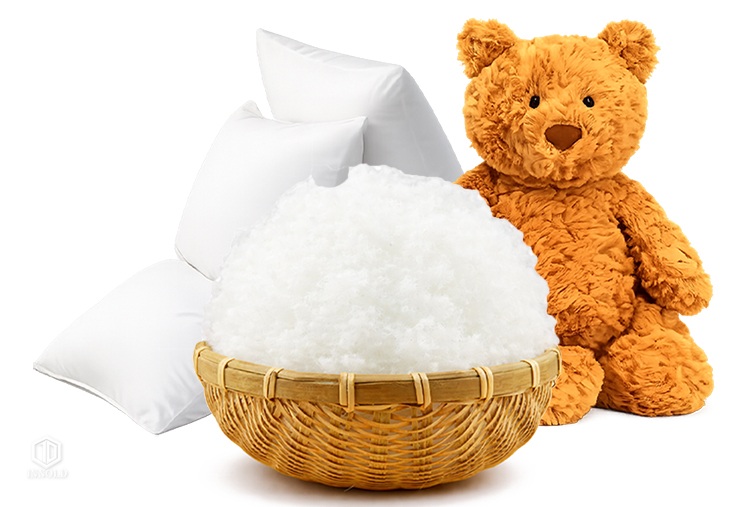
In the production of filled products such as pillows, plush toys, and cushions, many manufacturers tend to focus primarily on equipment performance—such as the efficiency and automation level of Fiber Opening Machines or automatic filling systems. However, the selection of fiber materials is equally critical, as it directly determines the final product quality, tactile experience, and overall market competitiveness.
Particularly when using automated fiber filling equipment, if the selected fiber specifications do not meet production requirements, it can lead not only to poor filling performance but also to issues such as machine clogging, reduced production efficiency, and even negative customer feedback—ultimately impacting the company’s brand reputation.
So, when facing different types of filled products like pillows and plush toys, how can manufacturers choose the most suitable fiber materials in a scientific and practical way? This article provides a comprehensive analysis of fiber types, key specifications, application scenarios, and selection principles to help manufacturers optimize their material configuration.
A. Common Types of Filling Fibers of Ball Fiber Filling Machine
Currently, the most widely used filling fibers on the market include the following categories:
1. Polyester Staple Fiber (PSF)
Polyester staple fiber is one of the most commonly used filling materials due to its relatively low cost, stable performance, and ease of processing. It is suitable for mass production and widely applied in pillows, cushions, and plush toys.
2. 3D Hollow Conjugated Fiber
This type of fiber features a hollow structure, providing superior resilience and bulkiness. It offers a soft hand feel, excellent elasticity, and good air permeability, making it ideal for high-end pillows, cushions, and other comfort-oriented products.
3. Recycled Fiber
Produced from recycled textiles or plastic materials, recycled fiber offers environmental benefits and cost advantages. It is commonly used in industrial fillings or low-cost toy applications, especially for manufacturers focused on sustainability and cost control.
4. Microfiber
Microfiber has a much finer diameter and delivers a touch similar to natural down. It is highly favored in premium products, especially in high-quality pillows and hospitality bedding, where superior softness and comfort are essential.
B. Key Parameters for Fiber Selection Ball Fiber Pillow Filling Machine
When selecting filling fibers, the following parameters must be carefully evaluated, as they directly affect both product performance and equipment compatibility:
1. Fiber Length
Common fiber lengths include 32mm, 51mm, and 64mm.
For pillows, fibers in the range of 51mm to 64mm are typically recommended to achieve better loft and bulkiness.
For plush toys, 32mm to 51mm fibers are preferred, as they are easier to fill and shape.
2. Fiber Fineness (Denier)
The finer the fiber, the softer the touch.
3D fibers are fine and soft, ideal for pillows.
7D fibers offer a balance between softness and support.
15D fibers are coarser, providing stronger structural support, making them suitable for plush toys.
In general:
Pillows: 3D–7D
Plush toys: 7D–15D
3. Crimp Level
The degree of fiber crimp affects bulkiness and resilience.
High-crimp fibers provide better loft, elasticity, and a lighter feel—ideal for pillows.
Low-crimp fibers are stiffer and offer stronger support.
4. Resilience (Recovery Performance)
Resilience is a key factor influencing product durability.
Fibers with high resilience help maintain shape over time and resist flattening, making them suitable for high-end products. In contrast, fibers with poor resilience tend to deform easily, negatively affecting user experience.
C. Recommended Fiber Configurations for Different Products Home Textile Filling Machine
1. Pillow Filling Solution
The primary objective is to achieve softness, loft, and excellent resilience.
It is recommended to use 3D hollow conjugated fibers, with a fiber length ranging from 51mm to 64mm and a fineness of 3D to 7D. This combination delivers a soft touch, good breathability, and superior comfort, making it ideal for home-use pillows as well as high-end hospitality bedding.
2. Plush Toy Filling Solution
For plush toys, the focus is on shape retention, structural stability, and filling efficiency.
Commonly used materials include standard polyester fibers or recycled fibers, with lengths between 32mm and 51mm and fineness ranging from 7D to 15D. These fibers provide sufficient support while remaining easy to fill, making them suitable for plush toys, stuffed animals, and cartoon character products.
3. Hybrid Filling Solution (Premium Series)
To balance softness and internal support, many manufacturers adopt a hybrid filling approach:
The outer layer uses fine 3D fibers to ensure a soft and comfortable surface.
The middle or inner layer uses 7D or 15D coarser fibers to enhance structural support.
This layered structure improves overall product quality and enhances the end-user experience, particularly in premium product lines.
D. Impact of Fiber Selection on Filling Equipment Performance Ball Fibre Filling Machine
The choice of fiber materials not only affects product quality but also directly influences equipment stability and efficiency:
Excessively long fibers are prone to entanglement within machine components, leading to blockages and reduced production speed.
Overly fine fibers tend to disperse easily, requiring a highly stable and precisely controlled air conveying system; otherwise, filling uniformity and machine cleanliness may be compromised.
High impurity content increases maintenance frequency and costs, and may cause mechanical failures, affecting production continuity.
Therefore, it is strongly recommended to integrate fiber opening machines with automatic filling systems in a well-matched production line to ensure efficient and stable operation.
E. How to Select Fiber Based on Your Production Needs Chair Cushion Filling Machine
When selecting fiber materials, manufacturers should evaluate their specific requirements from multiple perspectives:
1. Product Positioning
Low-end market: prioritize cost-effective recycled fibers.
Mid-range products: typically use standard polyester fibers.
High-end products: adopt 3D hollow or microfiber to meet higher standards of softness and quality.
2. Production Capacity & Automation Level
High-capacity production requires fibers that are easy to open and fill, supporting continuous operation.
Highly automated lines favor fibers with consistent specifications and stable performance to reduce adjustment time and maintenance.
3. Cost Management
A comprehensive evaluation should include raw material cost, equipment compatibility, and labor requirements, ensuring overall operational efficiency and profitability.
4. Market Preferences
Different regions have distinct preferences:
Europe & North America: emphasize softness and loft.
Southeast Asia: focus on cost-performance ratio.
Middle East: prefer denser, more supportive filling materials.
INNOLD One-Stop Fiber Filling Solution
INNOLD provides a comprehensive, one-stop fiber filling solution tailored to customer needs, including:
Fiber material selection guidance
Matching of fiber opening and filling equipment
Fully automated production line solutions
We also support multi-material testing, helping manufacturers improve production efficiency, ensure consistent product quality, and effectively reduce operational costs.
In the manufacturing of pillows and plush toys, fiber selection is just as critical as equipment performance.
Choosing the right fiber specifications not only enhances product performance but also optimizes production efficiency and reduces operational risks, ultimately delivering a more stable and sustainable competitive advantage.
Key Takeaways:
Pillows: Recommend 3D–7D hollow conjugated fibers for softness and loft.
Plush toys: Recommend 7D–15D standard fibers for support and shape retention.
Premium products: Adopt hybrid filling solutions to balance comfort and structure.
With the advancement of automation and the growing demand for product customization, the integration of fiber materials with equipment systems will become a key factor in strengthening manufacturing competitiveness in the future.
Post time:2026-04-03
