Fiber Opening and Filling Machine Integrated Cotton Pillow Filler Price

Fiber Opening and Filling Machine Integrated Cotton Pillow Filler Price
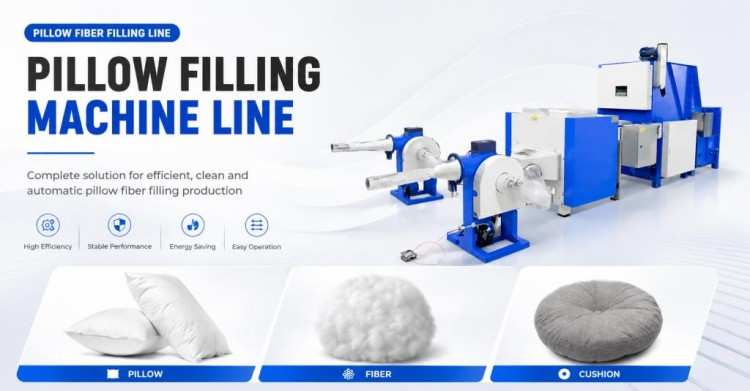
INNOLD specializes in providing fiber opening machines, Fiber Filling Machines, and complete fiber-filling production lines for the home textile and upholstered furniture manufacturing industries.
Our fiber-filling production lines are designed to process a wide range of filling materials, including polyester fiber, PP cotton, hollow conjugated fiber, recycled fiber, and various other suitable filling substances.
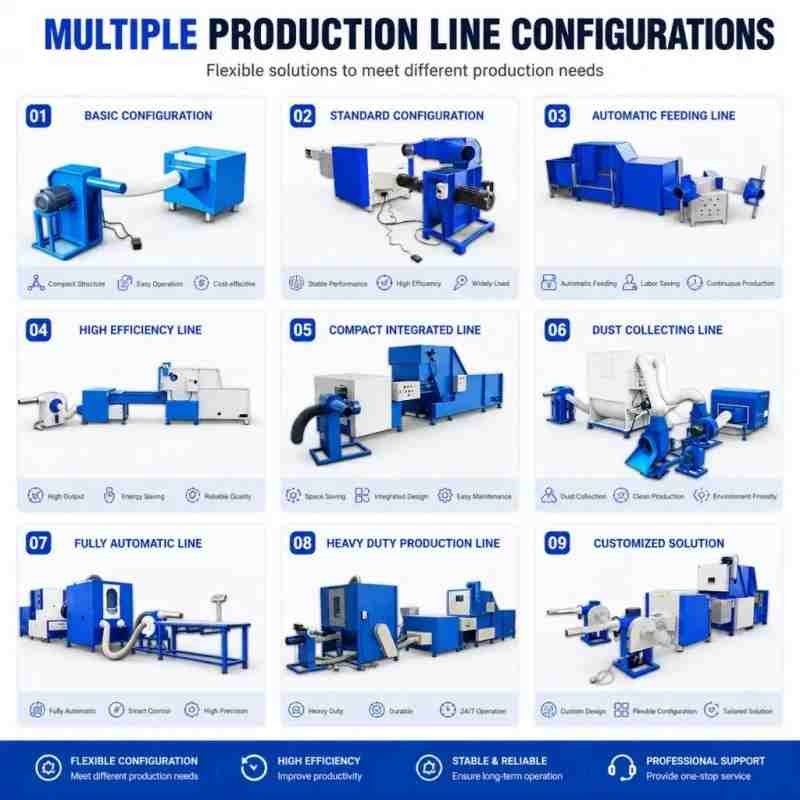
From basic fiber opening and filling systems to integrated production lines—incorporating automated feeding, foam shredding, fiber conveying, blending, precision filling, and packaging equipment—we offer flexible solutions tailored to your specific production requirements.
1. What Is a Fiber Opener and Pillow Filler?
A fiber-filling production line is an integrated manufacturing system designed to pretreat, process, and transport loose fibrous materials, and subsequently fill them into various finished products—such as pillows, cushions, plush toys, pet beds, and other soft textile goods.
Unlike using a single, standalone filling machine, a complete production line connects multiple processing units in a cohesive sequence, creating a more continuous and organized manufacturing workflow.
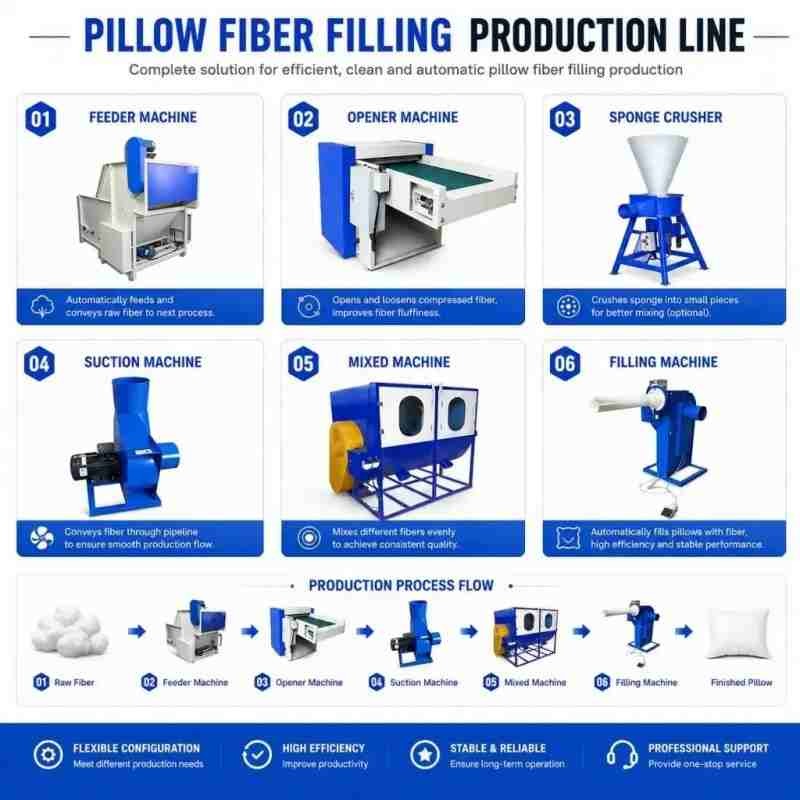
Depending on the chosen configuration, a production line may include the following equipment:
Fiber opener
Foam shredder
Fiber conveying system
Fiber mixing chamber
Fiber-filling machine
Not every production line requires all of the aforementioned equipment. The specific configuration depends on factors such as the raw materials used, the type of finished products, production capacity requirements, and the desired level of automation.
2. How Does a Integrated Fiber Opening and Filling Machine Work?
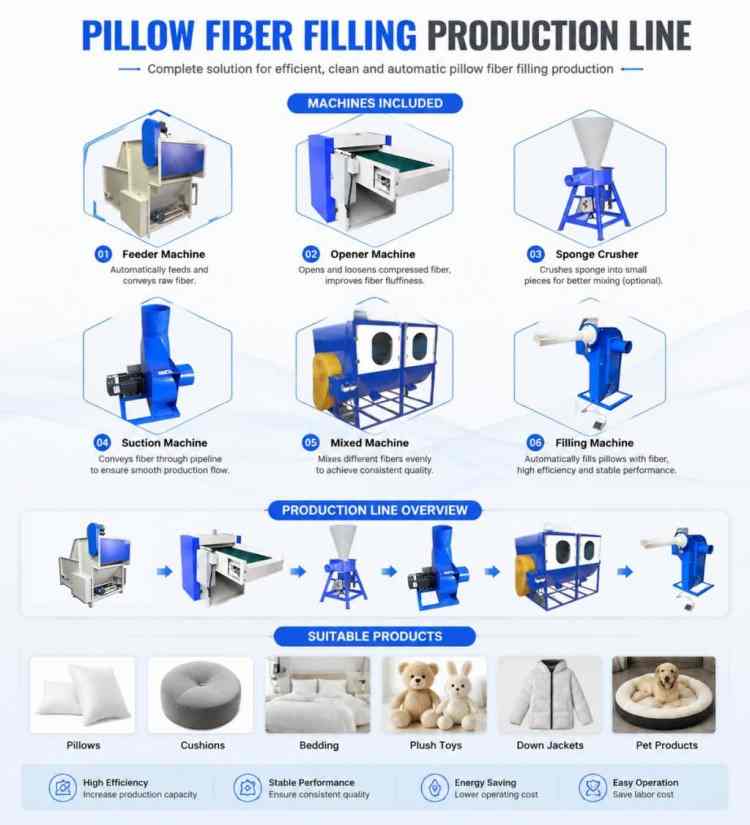
A typical fiber-filling production process consists of the following stages:
Raw Material Feeding → Fiber Opening → Foam Shredding (Optional) → Fiber Conveying → Fiber Blending (Optional) → Fiber Filling → Weighing and Packaging (Optional)
Step 1: Raw Material Feeding
An automatic feeder introduces raw fiber materials into the processing system.
This step ensures a continuous supply for subsequent opening and filling operations, reducing the need for manual handling.
Suitable raw materials include polyester staple fibers, hollow conjugated fibers, PP cotton, and various other types of filling materials.
Step 2: Fiber Opening
An opening machine loosens compressed or tangled fibers, restoring them to a fluffy, voluminous state.
This process breaks up fiber clumps, making the material easier to transport and fill.
Thorough opening is essential to ensure the final product achieves the desired level of softness, loft, and uniform filling.
Step 3: Foam Shredding (Optional)
If recycled or shredded foam is required as a filler, a foam shredding machine can be integrated into the production line.
This equipment breaks down foam material into smaller pieces, preparing it for subsequent blending or filling.
This configuration is particularly useful for manufacturing cushions, bean bags, and various types of upholstered furniture that utilize blended filling materials.
Step 4: Fiber Conveying
A fiber conveying system (suction feeder) uses airflow to transport opened fibers or other pre-processed materials between different pieces of equipment.
It connects the various stages of the production process, minimizing the need for manual handling.
The conveying system can be flexibly configured based on the factory layout and the positioning of the equipment.
Step 5: Fiber Blending (Optional)
A fiber blending chamber allows for the mixing of multiple filling materials to create a more uniform blend.
For example, polyester fibers can be mixed with shredded foam in specific proportions to meet a client's exact requirements.
The blending process ensures the production of a composite filler that meets specific manufacturing standards. Step 6: Fiber Filling
A fiber-filling machine is used to stuff processed, loose-fill material into pillowcases, cushion covers, plush toys, or other similar products.
Depending on the product dimensions and specific filling requirements, appropriate machine configurations and nozzle specifications can be selected. Step 7: Weighing and Packaging (Optional)
If precise control over the fill weight is required, a Weighing Platform or a quantitative filling system can be integrated.
Once filled, the finished products can be sent to optional compression-packaging equipment, which reduces their volume to facilitate storage and transport.
3. Fiber Opening and Pillow Filling Machine Selection
Different factories require different production capacities.
INNOLD's existing pillow filling production line configurations include several capacity options:
Model | Configuration | |
IN-MC16 | Fiber Opening Machine+Single-Nozzle Fiber Filling Machine | |
IN-2MC16 | Fiber Opening Machine+Dual-Port Fiber Filling Machine | |
IN-MC46 | Fiber Feeding Machine+Fiber Opening Machine+Fiber Filling Machine | |
IN-MC166 | Fiber Feeder+Fiber Opener+Fiber Suction Machine+Fiber Mixing Chamber+Fiber Filling Machine | |
IN-MC368 | Fiber Feeder+Fiber Opener+Foam Shredder+Fiber Suction Machine+Fiber Mixing Chamber+Fiber Filling Machine | |
IN-MC466 | Fiber Feeder+Fiber Opener+Foam Shredder+Fiber Suction Machine+Fiber Mixing Chamber+Fiber Filling Machine+Weighing Station | |
Additional settings can be modified as needed. | ||
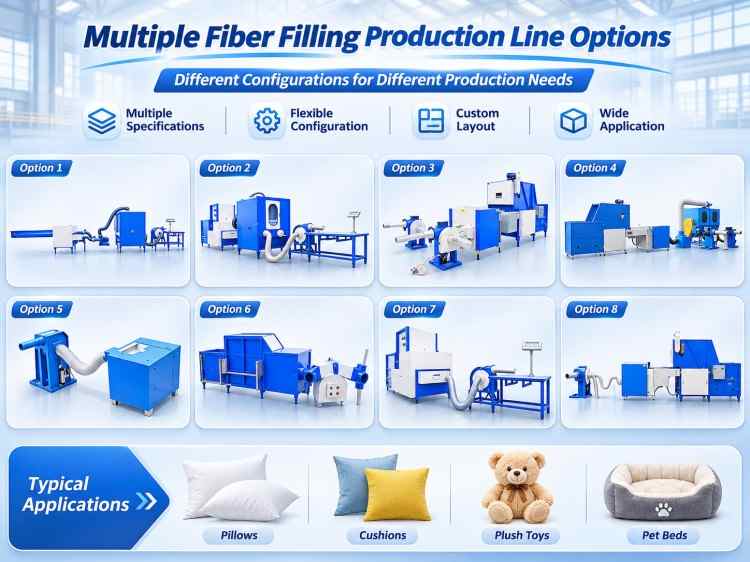
These are reference capacities published for the listed configurations. Actual output depends on the material type, fiber condition, machine setup, product specifications, and operating conditions.
Other production capacities and equipment combinations can be discussed according to your requirements.
4. What Industries Use Cotton Opening and Filling Machine?
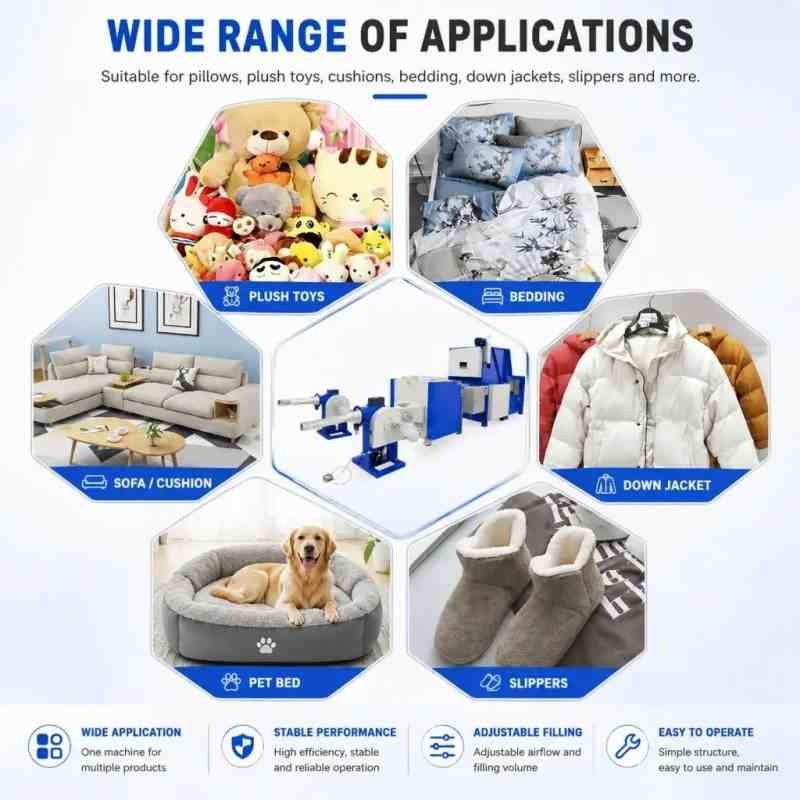
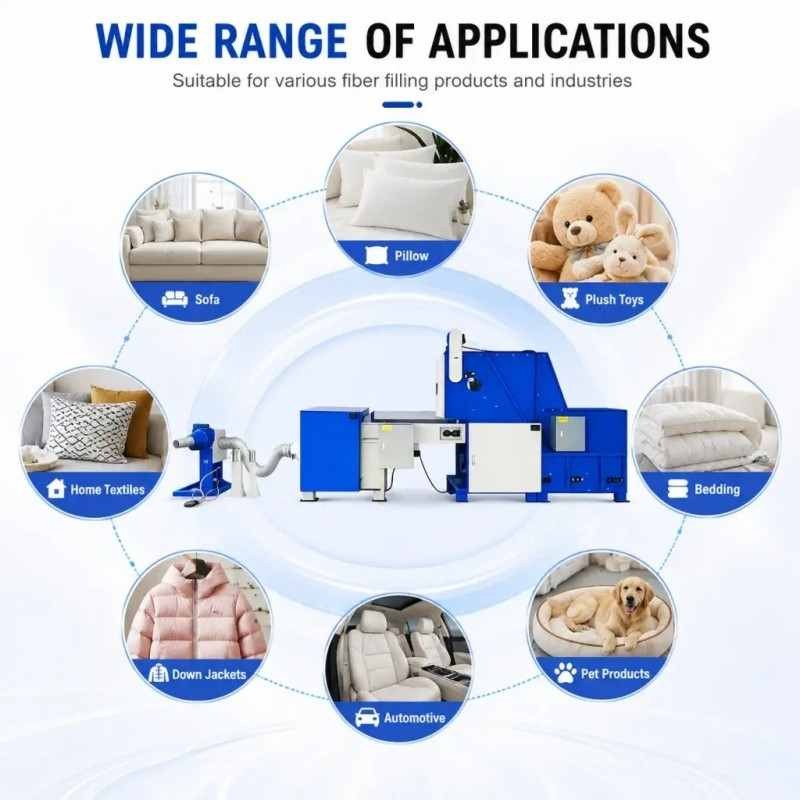
The INNOLD fiber-filling production line is suitable for a wide range of manufacturing industries:
4.1 Pillow manufacturing
4.2 Cushion manufacturing
4.3 Plush toy manufacturing
4.4 Sofa and upholstered furniture manufacturing
4.5 Pet product manufacturing
4.6 Home textile industry
5. What Filling Materials Can the Two-in-One Fiber Opening and Filling Machine Process?
Depending on the selected equipment and configuration, INNOLD production lines can be designed for processing suitable filling materials such as:
Material | Typical Applications |
Polyester Staple Fiber | Pillows, cushions, plush toys |
PP Cotton | Plush toys, pillows, soft products |
Hollow Conjugated Fiber | Pillows and bedding |
Siliconized Fiber | Soft pillows and cushions |
Recycled Polyester Fiber | Recycled fiber-filled products |
Microfiber | Selected home textile products |
Shredded Sponge Foam | Cushions, sofa filling, bean bags |
For mixed-material applications, a sponge crushing machine and Fiber Mixing Box can be incorporated into the production line.
Material compatibility should be evaluated according to fiber length, density, moisture content, foam size, and other processing characteristics.
Get Your Customized Fiber Filling Production Line Solution
Are you planning to establish a new pillow factory, upgrade your cushion production workshop, or expand your plush toy manufacturing business?
INNOLD provides flexible fiber processing and filling equipment solutions designed around your actual production requirements.
Whether you need a simple two-machine filling system or a more comprehensive production line with automatic feeding, fiber opening, sponge crushing, conveying, mixing, weighing, and packaging, our team can help you select the right equipment combination.
Contact INNOLD today to discuss your production requirements and receive a customized fiber filling production line proposal.
Email: info@syinnold.com
WhatsApp: +86 180 4005 4857