
How To Reduce Fiber Waste In Pillow And Toy Production?
For manufacturers of pillows and plush toys, fiber represents one of the primary production costs. As daily output increases, even minor amounts of waste can accumulate, leading to significant losses.
Fiber waste goes beyond material simply scattered on the floor; it can also stem from issues such as overfilling, poor fiber opening, uneven filling, blockages, improper weight control, and substandard products.
So, how can manufacturers reduce fiber waste while maintaining product quality?
1. Open The Fiber Properly
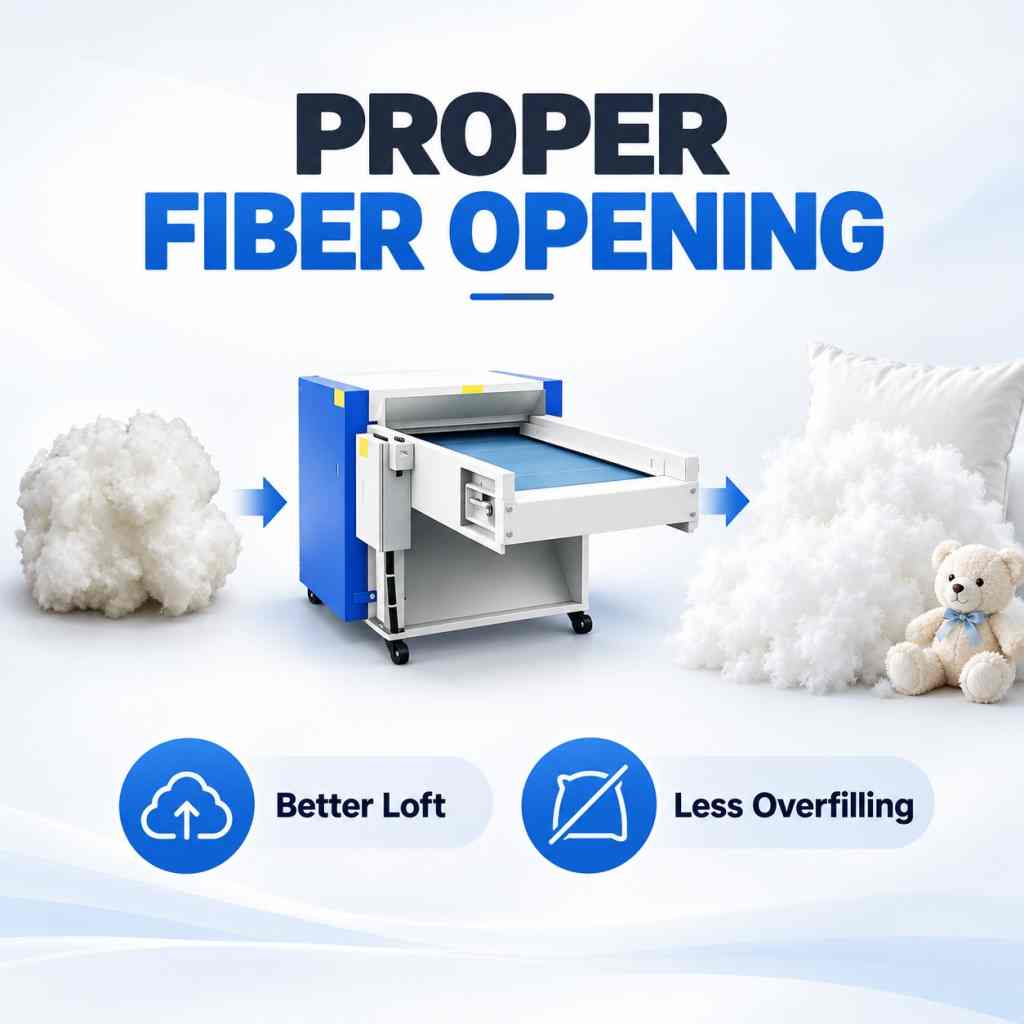
Compressed fibers should be thoroughly opened before filling.
If the fibers are not sufficiently opened, they may clump together. This can not only force workers to use more material to achieve the desired fill level but also cause blockages in pipes or machinery.
Using an opening machine helps separate the compressed fibers, making them softer, fluffier, and more uniform.
2. Control The Filling Weight
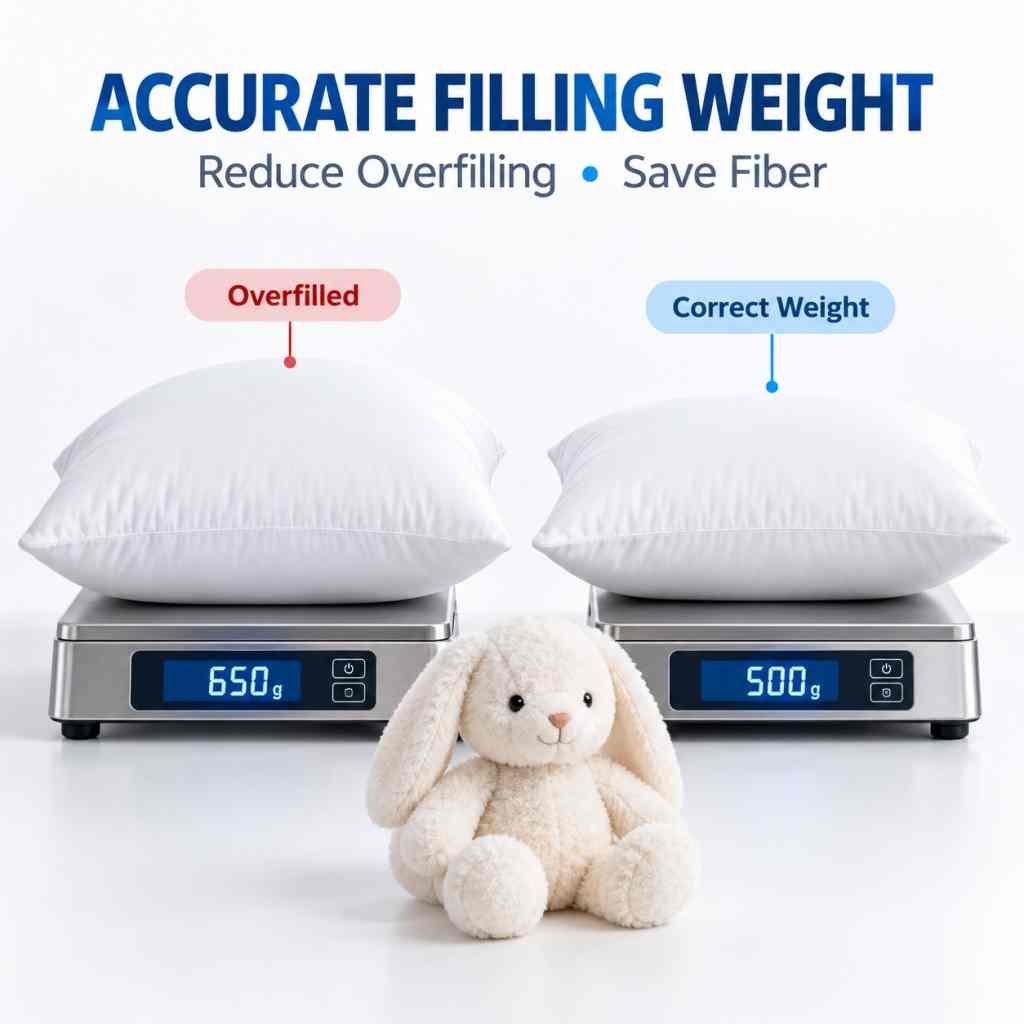
Overfilling is one of the most common causes of unnecessary fiber consumption.
For instance, if a pillow has a specified design fill weight but operators repeatedly add extra fiber during production, this excess material results in unnecessary production costs.
Factories should establish a standard fill weight for each product.
In high-volume production, the use of weighing systems helps to:
Control fill quantities
Reduce overfilling
Improve product consistency
Lower material costs
Streamline quality inspections
Consistent weight control is particularly important for standard pillows, hotel pillows, OEM products, and large-scale production orders.
3. Improve Filling Consistency
Uneven filling can also lead to waste.
If one part of a pillow or toy is overfilled with fiber while another is underfilled, workers often have to remove, redistribute, or add more filling material.
Using appropriate fiber-filling equipment helps improve fiber distribution and reduces the need for repeated adjustments.
Stable airflow, an optimal filling speed, and correct operating procedures all contribute to greater filling uniformity.
4. Choose The Correct Filling Nozzle
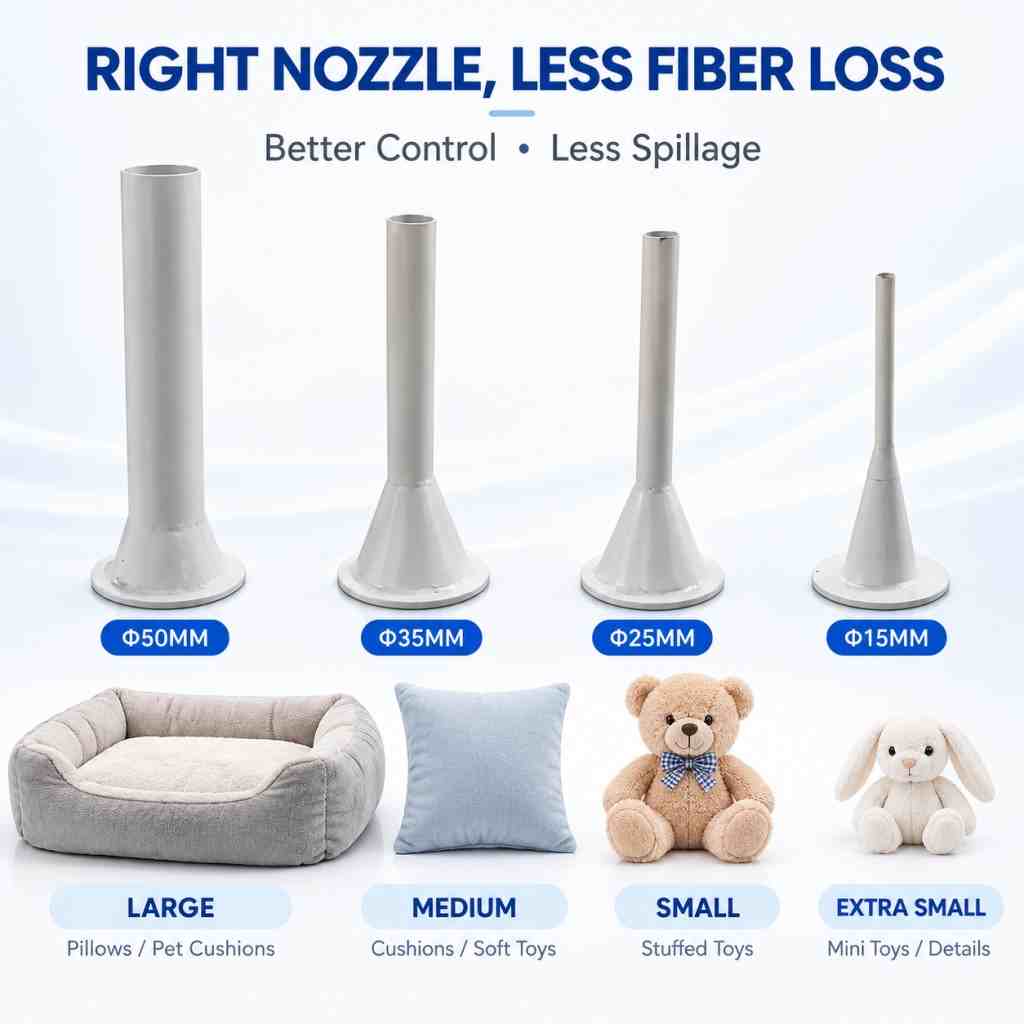
Selecting the right nozzle size is crucial in the production of plush toys.
If the nozzle is too large for a small toy, filling fibers may spill out of the filling opening; conversely, if it is too small, the filling process may slow down or become clogged.
Using interchangeable nozzles allows manufacturers to select the appropriate size for different products.
For example:
Smaller nozzles for small toys and narrow filling openings
Medium-sized nozzles for standard plush toys
Larger nozzles for large toys, cushions, and pet products
Choosing the correct nozzle helps minimize fiber spillage and improves filling precision.
5. Keep Airflow Stable
Most fiber-filling machines use airflow to transport the fiber.
If the airflow is too weak, fibers may accumulate inside the piping and cause a blockage; if the airflow is improperly controlled, fibers may escape from the filling area or become difficult to manage.
Therefore, the air compressor configuration should be matched to the filling machine and production requirements.
6. Use A Fiber Mixing Box For Continuous Production
In medium-to-large-scale factories, an unstable fiber supply can lead to frequent downtime and uneven filling.
A fiber mixing bin stores and buffers the fiber before it enters the filling machine.
This helps maintain a continuous fiber supply, thereby enhancing the stability of the production process.
A well-configured production line minimizes unnecessary handling, fiber spillage, and the need for repeated adjustments to filling parameters.
7. Keep The Working Area Clean
Fibers that have fallen onto a dirty floor are generally difficult to reuse.
Factories should keep fiber preparation and filling areas clean and use appropriate containers or collection zones for storing loose fibers.
Maintaining cleanliness during material handling helps reduce contamination and makes it easier to reclaim usable fibers when appropriate.
The suitability of reclaimed fibers should always depend on product quality requirements and the cleanliness of the material.
How Can A Better Production Line Reduce Waste?
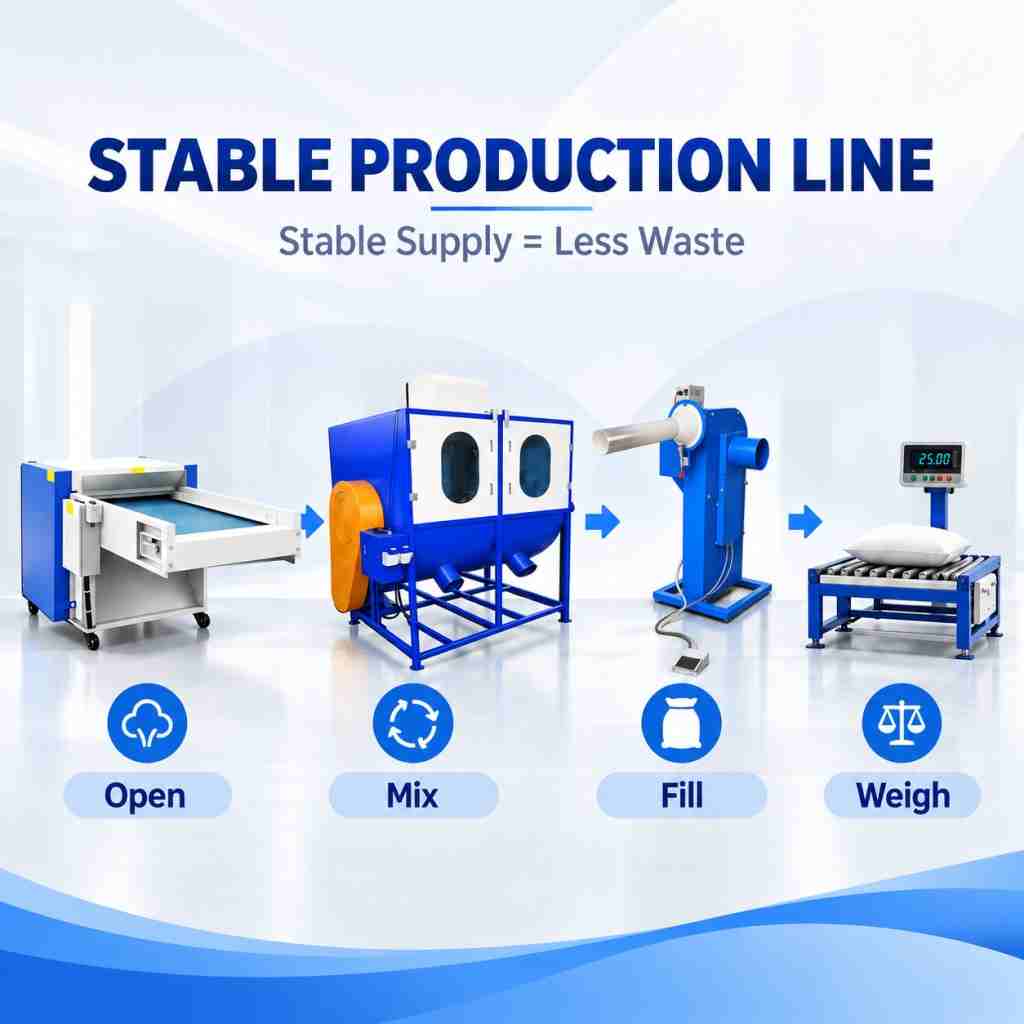
A more stable production process might include: fiber feeding → fiber opening → fiber blending → filling → weighing.
Each stage plays a distinct role:
Fiber opening enhances loft;
Fiber blending stabilizes the raw material supply;
Filling equipment helps improve product consistency;
The weighing stage controls the amount of material used;
The goal is not merely to reduce fiber consumption, but to use the appropriate amount of fiber more efficiently while ensuring product quality.
Minimizing fiber waste during the production of pillows and plush toys requires effective control over materials and equipment.
Key areas for achieving the most significant improvements include:
Proper fiber opening
Precise filling weight
Stable airflow
Correct nozzle selection
Continuous fiber supply
Clean material handling
As production volume increases, even minor improvements can yield significant results.
INNOLD can recommend suitable fiber opening and filling solutions tailored to your product type, fiber material, daily output, and factory layout, helping you boost production efficiency and maximize material utilization.
FAQ: Reducing Fiber Waste
Why is too much fiber used during pillow filling?
Common reasons include overfilling, poor weight control, insufficient fiber opening, and uneven fiber distribution.
Can a Fiber Opening Machine reduce material waste?
It can help. Properly opened fiber has better loft and more uniform distribution, which can improve filling efficiency and reduce unnecessary overfilling.
How can a weighing system save fiber?
A weighing system helps maintain a consistent filling weight and reduces accidental overfilling.
Does nozzle size affect fiber waste?
Yes. An unsuitable nozzle can cause fiber spillage, blockage, or poor filling control, especially when filling small plush toys.
Can INNOLD help optimize an existing filling line?
Yes. INNOLD can recommend equipment configurations based on your fiber material, product size, production capacity, and current filling process.
Contact Us
Email: info@syinnold.com
WhatsApp: +86 180 4005 4857
Post time:2026-10-03
