
How To Choose The Right Fiber Material For Pillow And Plush Toy Filling?
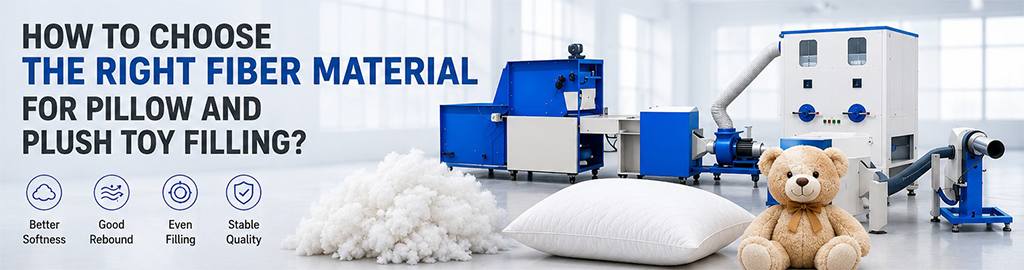
For manufacturers of pillows, plush toys, cushions, pet beds, and home textile products, selecting the right fiber material is just as important as choosing the right filling equipment.
Different fiber materials directly influence product softness, resilience, filling efficiency, aesthetic quality, and the stability of the production process.
While newcomers to the industry often focus primarily on equipment, the fiber material itself plays a crucial role in the quality of the final product.
So, how should manufacturers select the appropriate fiber materials for filling pillows and plush toys?
This article introduces several common fiber materials and provides guidance on choosing the best option based on product type, quality requirements, and production budget.
Why Fiber Material Selection Matters
Fiber materials impact virtually every stage of the filling process.
Selecting the right fiber materials helps achieve:
superior softness, enhanced resilience, more uniform filling, better shape retention, smoother machine operation, a lower risk of clogging, and higher customer satisfaction.
If unsuitable fiber materials are used, manufacturers may face issues such as uneven filling, poor product appearance, lump formation, low resilience, or frequent fiber blockages.
For manufacturers of pillows and plush toys, the choice of high-quality materials is the cornerstone of consistent product quality.
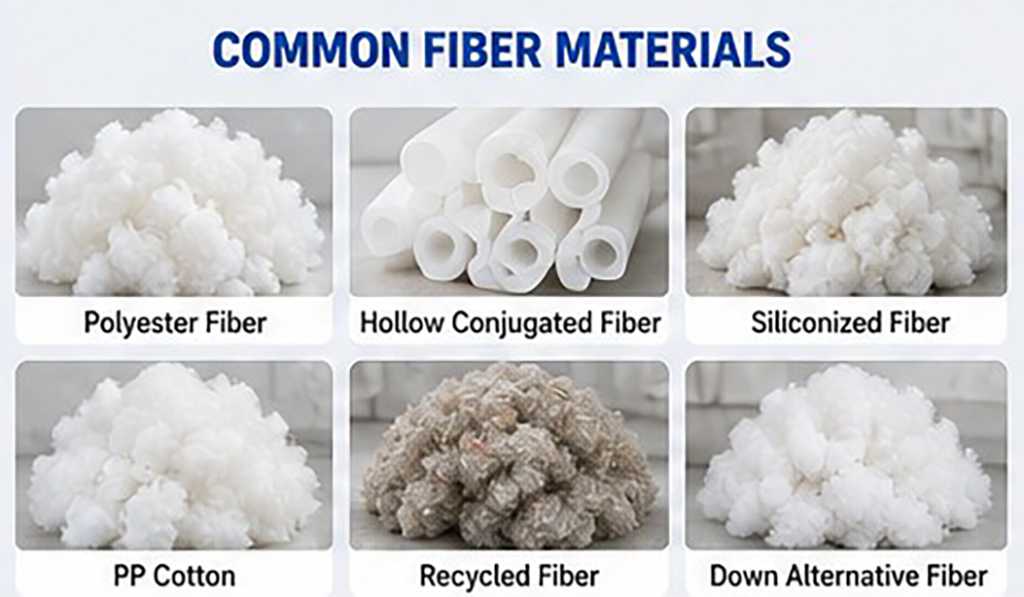
Common Fiber Materials Used For Filling
The most commonly used materials in the production of pillows and plush toys include:
polyester fiber, hollow conjugate fiber, silicone-coated fiber, PP cotton, recycled fiber, and down-alternative fiber.
Each material has unique characteristics and is suitable for different products.
1. Polyester Fiber
Polyester fiber is one of the most widely used filling materials in the pillow, plush toy, and home textile industries.
It is popular due to the following advantages:
Consistent quality, softness and comfort, ease of processing, abundant supply, and cost-effective production.
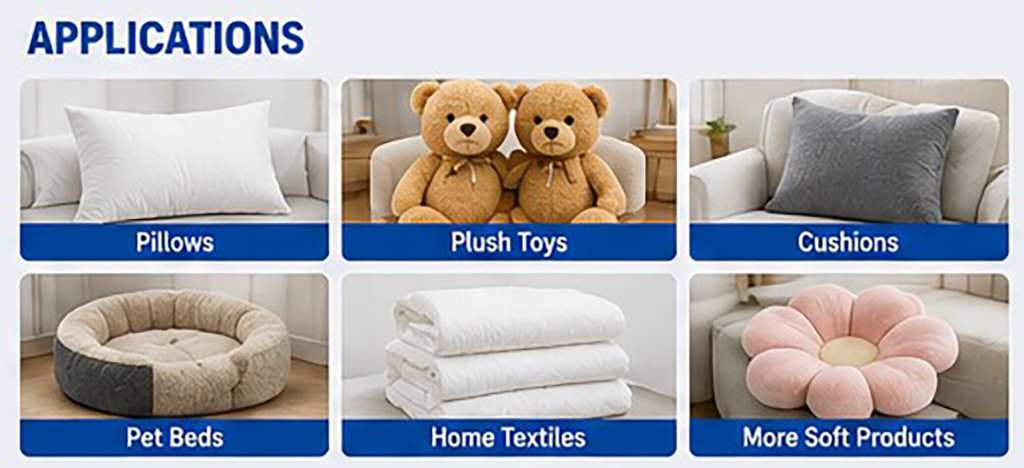
Polyester fiber can be used to make pillows, cushions, plush toys, pet beds, and many other fiber-filled products.
For many manufacturers, polyester fiber is the most practical and common choice.
2. Hollow Conjugated Fiber
Hollow conjugate fibers are commonly used in the production of pillows and cushions.
Thanks to their hollow structure, these fibers offer superior loft and air-retention properties.
Key advantages include:
High loft, excellent resilience, a comfortable feel, and lightweight filling—making them ideal for bedding.
These fibers are particularly well-suited for pillows that require a balance of softness, loft, and comfort.
Hollow fibers are often an ideal choice for hotel pillows, household pillows, and premium bedding.
3. PP Cotton
PP cotton is commonly used in plush toys, dolls, cushions, and various decorative soft goods.
Its soft, lightweight texture makes it ideal for products requiring a comfortable feel.
Key applications include:
Teddy bears, plush dolls, stuffed animal toys, decorative throw pillows, and small cushions.
PP cotton is a popular choice among plush toy manufacturers because it helps create products that are soft to the touch and maintain a full, plump shape.
However, the material requires proper loosening before filling to ensure even distribution and minimize clumping.
4. Recycled Fiber
Manufacturers aiming to reduce material costs often use recycled fibers.
These fibers are suitable for producing low-cost pillows, cushions, pet products, and various standard filled goods.
Their advantages include:
Lower material costs
Suitability for cost-sensitive products
Suitability for specific low-to-mid-range markets
However, recycled fibers also have certain limitations:
Using appropriate Fiber Opening Machinery is crucial when working with recycled fibers.
Proper opening helps improve fiber uniformity, reduce clumping, and ensure stability during the filling process.
Best Fiber Material For Pillow Filling
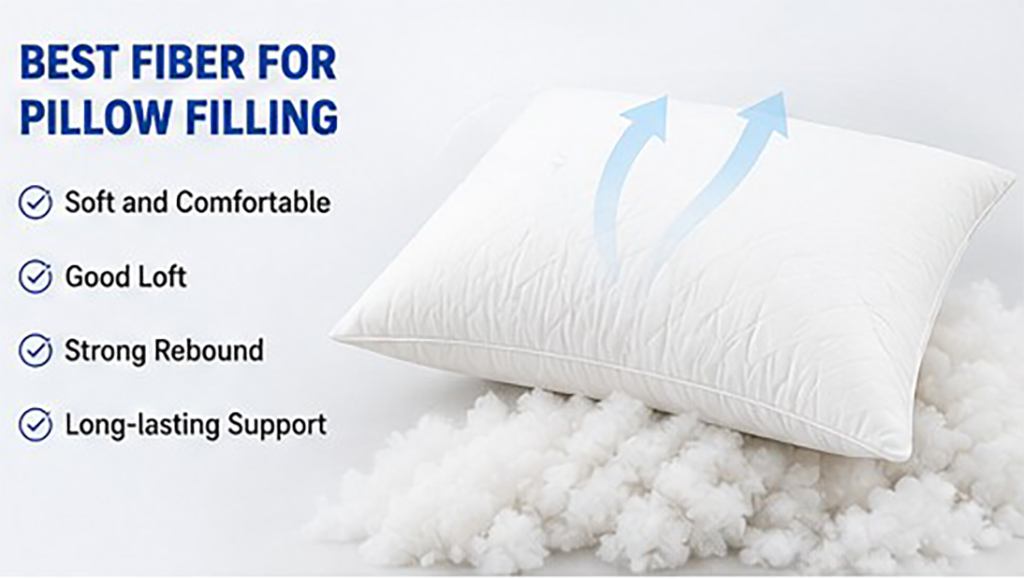
When manufacturing pillows, manufacturers should focus on softness, loft, resilience, and comfort.
Commonly used materials include:
Hollow conjugate fibers, siliconized fibers, polyester fibers, and down-alternative fibers.
For low-cost pillows, standard polyester fibers or recycled fibers can be used.
For high-quality pillows, hollow fibers, siliconized fibers, or down-alternative fibers are better choices.
The specific material selection depends on your target market and price point.
Best Fiber Material For Plush Toy Filling
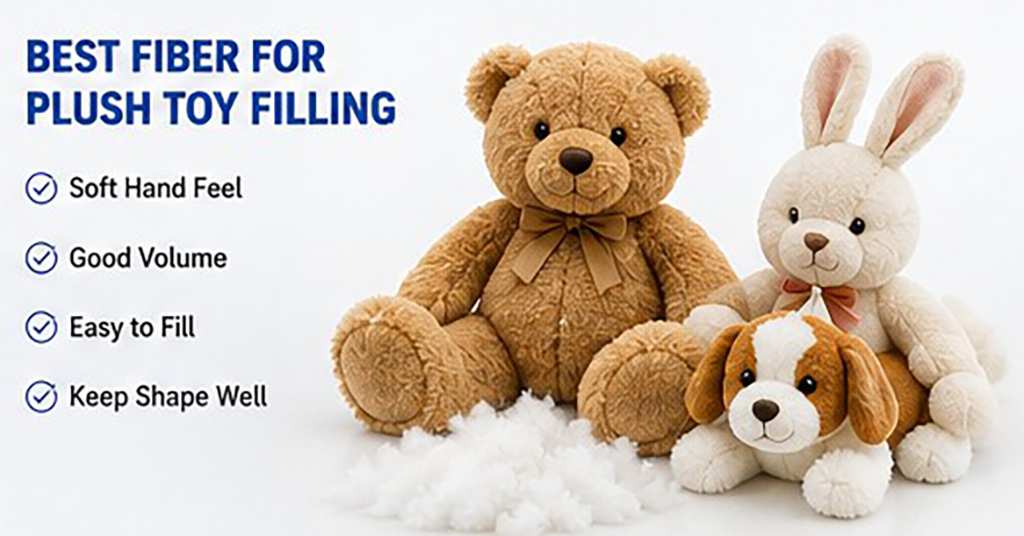
Filling materials used in the production of plush toys should be soft in texture, easy to fill, and capable of maintaining the product's shape.
Commonly used materials include:
PP cotton, polyester fiber, and silicone-treated fiber.
For small plush toys, the fibers used should pass easily through narrow filling nozzles.
For large plush toys, the material should provide sufficient loft and maintain a good shape.
If the fibers are not adequately opened, the filled plush toy may exhibit an uneven surface, collapse, or clumping.
How Fiber Material Affects Machine Selection
Different fiber materials may require different machine configurations.
For example:
Compressed fibers require the use of an opening machine.
Producing plush toys may require interchangeable filling nozzles.
Medium- to large-scale production may require fiber blending bins to ensure a stable supply of material.
The choice of machinery depends not only on the product type but also on the fiber materials used.
Therefore, manufacturers should identify the material type before selecting a production line.
Why Fiber Opening Is Important For Material Performance
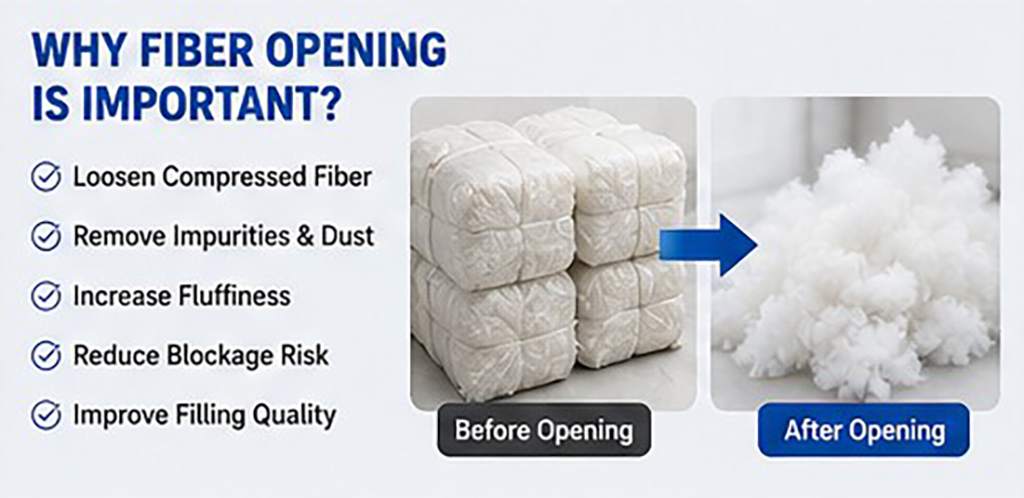
Even high-quality fibers cannot deliver optimal performance if they are not sufficiently opened.
Fibers are typically compressed into bales during storage and transport. Using them without an opening process can lead to issues such as poor loft, uneven filling, fiber clumping, reduced resilience, and clogging during the filling operation.
A fiber opening machine is used to loosen and separate the fibers prior to the filling stage.
Once opened, the fibers become softer and fluffier, making the filling process easier.
This not only boosts production efficiency but also enhances the quality of the finished product.
Free Production Solution Support From INNOLD
Different fiber materials require different equipment configurations.
INNOLD offers free, professional advice on the ideal fiber opening and filling solutions tailored to your product type, fiber material, daily output, facility size, and budget.
Whether you manufacture pillows, plush toys, cushions, pet beds, or home textiles, our team can help you select the right equipment configuration to ensure stable and efficient production.
Contact INNOLD today to receive a fiber-filling production solution customized for your business.

FAQ: How to Choose Fiber Filling Materials for Pillows and Plush Toys
What are the best fiber materials for pillow filling?
Common pillow filling materials include hollow conjugate fibers, siliconized fibers, polyester fibers, and down-alternative fibers. If superior softness, loft (fluffiness), and resilience are desired, hollow fibers or siliconized fibers are usually ideal choices. For products targeting the low-cost market, standard polyester fibers or recycled fibers can also be used.
What are the best filling materials for plush toys?
PP cotton, polyester fibers, and siliconized fibers are widely used for plush toys. These materials offer a soft touch, good loft, and help maintain the product's shape. For small plush toys, the fibers require proper opening (fluffing) treatment to ensure they pass smoothly through filling nozzles and fill the toy's intricate areas evenly.
What is the difference between polyester fiber and PP cotton?
Polyester fiber is widely used in pillows, cushions, pet beds, and home textile products due to its stable performance, cost-effectiveness, and ease of processing. PP cotton is frequently used in plush toys and decorative soft goods because it provides a soft, comfortable feel. The specific material choice depends on the type of final product, the desired softness, and the target market positioning.
Why do fibers need to be opened (fluffed) before filling?
During transport and storage, fibers are typically compressed into tight bales. Using compressed fibers directly can lead to clumping, uneven filling, reduced softness, and blockages in machine piping. Using an opening machine fluffs the fibers, making them easier to fill and helping to improve the quality of the final product.
Do fiber materials affect the performance of filling equipment?
Yes, they do. Different fiber materials vary in terms of flowability, softness, elasticity, and dust content. For example, siliconized fibers usually have good flowability, whereas recycled fibers may require a more powerful opening process and more frequent equipment cleaning. Fiber characteristics influence air pressure requirements, nozzle selection, cleaning frequency, and overall filling efficiency.
How can INNOLD assist me in choosing the right fiber materials and equipment?
INNOLD provides professional recommendations based on your product type, fiber materials, daily production volume, factory scale, and budget. Whether you manufacture pillows, plush toys, cushions, pet beds, or home textile products, our team can recommend the ideal fiber opening and filling solutions tailored to your specific production needs.
Post time:2026-07-08
